Fundación Quimera is a non-profit organization working to promote human and labor rights of Sex Workers in southern Ecuador, focused in migrants and national women. Vivian Cartagena, from the GAATW International Secretariat interviewed Rosa Manzo, Founder and President of Fundacion Quimera, in July 2024 to better understand the organisation's work, history, and context. The original interview was in Spanish and translated into English.
Vivian: Thank you very much Rosa for giving us the opportunity to learn more about Fundación Quimera. Could you tell me how this organisation was born? What were the main reasons that motivated the founding of Quimera?
Rosa: At Quimera, we consider that there was no specific reason or group of reasons to make the decision to found Quimera. In 1996 there was already a context of mobilisation in the country and there was a history of women's organisation, in this case, of sex workers who organised themselves in 1982, in Machala, province of El Oro, the southern border of Ecuador. It is important to highlight that sex workers form the first and largest women's organisation that speaks about rights (when in the country and even globally, little was said), and whose process has not only endured but has expanded from the local to national and regional levels. Before them, local women's organisations had been formed in the neighborhoods, whose struggles focused on improvements in basic services such as access to water, sewage, etc. However, this organising of sex workers was different because their fight was focused directly against exploitation and discrimination that affected them. They were against the stigma of being labeled as a “whore” or “bad woman,” as it took away their humanity and legitimized sex worker abuse by individuals (owners of sex work sites), authorities and institutions, families, and society as a whole.
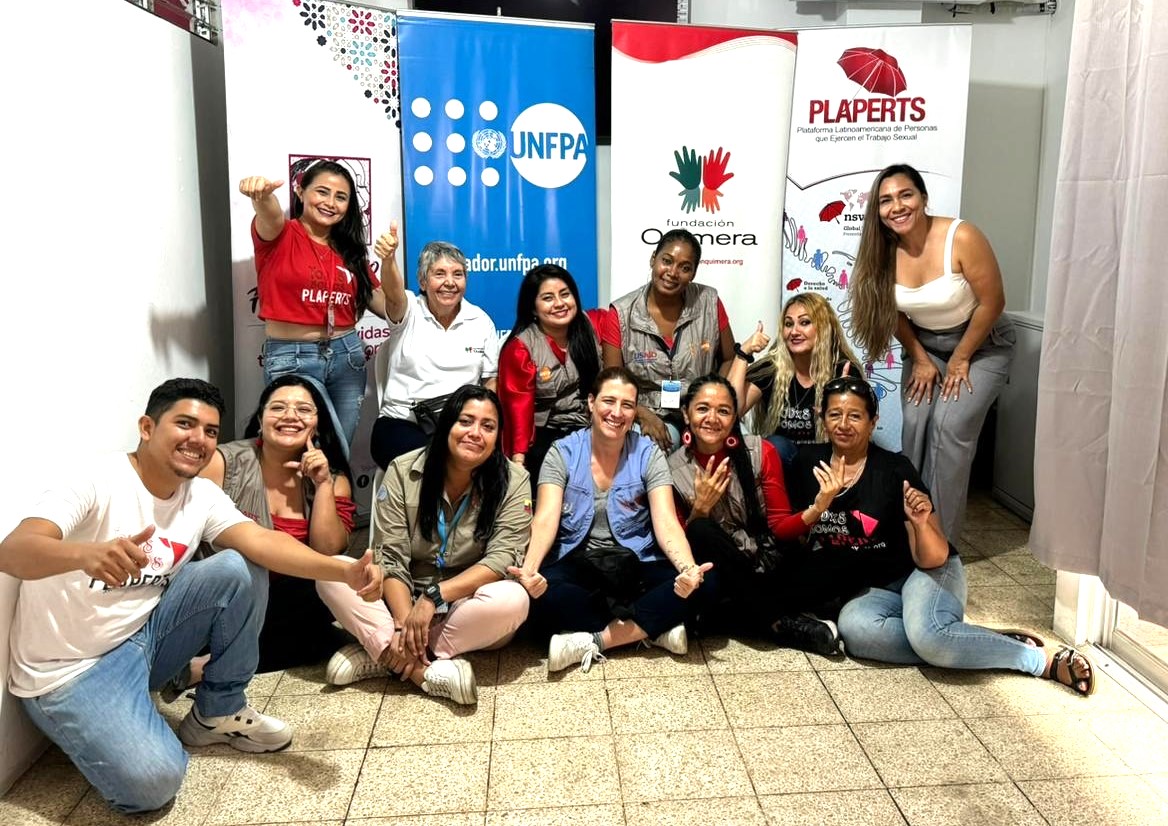 I was lucky enough to accompany that process from the first day, constituting, for me, the most important and enriching learning experience to define a feminist position that overcomes prejudices, conservatisms, and limitations. For this reason, when Quimera was established in 1996, we continued supporting the organisational process of the sex workers with whom we maintain ties to this day. Similarly, two years later, in 1998, the El Oro Women's Movement was formed, and the leaders of sex workers participated on equal terms with other women leaders from various sectors.
It is worth noting that, in all those years during the 20th century, our main connection as the Quimera Foundation was with the group of feminists for autonomy, led by Tatiana Cordero and Ana Lucía Herrera, among others.
Vivian: Could you tell me more about the rights approach on which you were focusing your work? What kind of work did they do with sex workers, for example, considering the context at that time in Ecuador?
Rosa: From the beginning, Quimera focused on working on the sexual and reproductive rights of women, including the issues of gender-based violence and human trafficking, as well as the prevention of HIV/AIDS. This generated the greatest learning for us as we continued in contact with sex workers, but also with the LGBTIQ population, people with HIV, migrants, etc. We are linked to these issues by questioning purely health and bio-medical approaches, which include tax control of bodies and sexualities, always advocating for empowering processes where populations affected by discrimination and social exclusion take the floor, self-represent their interests, and become subjects of rights. For this reason, we have also worked with emphasis on strengthening social organisations and their leadership, as well as local and institutional capacities, promoting processes of impact on public policies that put the needs of people in situations of greatest vulnerability at the center, and against marginalisation and criminalisation.
This facilitation of processes such as that of sex workers, for example, has contributed to developing their leadership to the point that they are currently powerful leaders, from whose agency we continue to learn to act together in the implementation of strategies for enforceability, access, and exercise of rights.
Regarding our work with human trafficking and gender-based violence, it was in 1997 that we began this task together with Tatiana Cordero and the Women's Communication Workshop, we carried out research to make this reality visible in Ecuador. There, we found that there were many cases of sexual exploitation that were also linked to trafficking, identifying the routes that involved women who were mobilised from other places. We were able to verify that trafficking was linked to a continuum of human rights violations, in contexts where social and structural determinants come into play that must be considered so as not to see trafficking only as an isolated crime or phenomenon. We also identified that the greatest existence of trafficking occurred at the internal level, that criminal groups did not always correspond to the idea of organised crime gangs, but also to semi-structured, informal and even family groups. We were able to identify that the contexts in which these cases mostly occurred were those of impoverishment and violence. It was also revealing to find that the State institutions and their public servants had an absolutely blaming view of the victims of trafficking, including girls and adolescents in situations of sexual exploitation, whom they treated as criminals and confined them in houses intended for offending minors. At that time, there were no legal figures in the Ecuadorian Penal Code to punish these crimes (e.g. sexual exploitation, human trafficking).
 Since 2000, with the support of the ILO and other international cooperation agencies, we have worked on pioneering programs for the country, where once again we pointed out the importance of promoting prevention and a comprehensive approach, based on respect for the rights of victims and people at risk, over punitive and victimising responses, or victim-blaming criteria.
In sustained work as a network, local capacities, gender and human rights approaches and public policies were strengthened. For example, in 2005 we contributed to legal reforms that allowed access to justice for victims and created specialised institutions such as shelters, expansion of the victim and witness protection program, judicialization, and conviction for the first cases of trafficking and child pornography in the country in 2006. On the other hand, thanks to everything mentioned above, a model was adopted that put the needs of the victims and their right to care, protection and comprehensive reparation at the center, discarding the prioritisation of judicialization processes as the only means of intervention. This was a sustained process until 2013, where we maintained discrepancies with the global anti-trafficking agenda due to its lack of incorporation of the human rights approach and the predominance of the State in punitive responses, immigration control and restrictions on the freedom of mobility of persons.
Vivian: In the current context, what are the biggest challenges regarding trafficking in women, including migrant women who have had a strong presence in recent years in Ecuador?
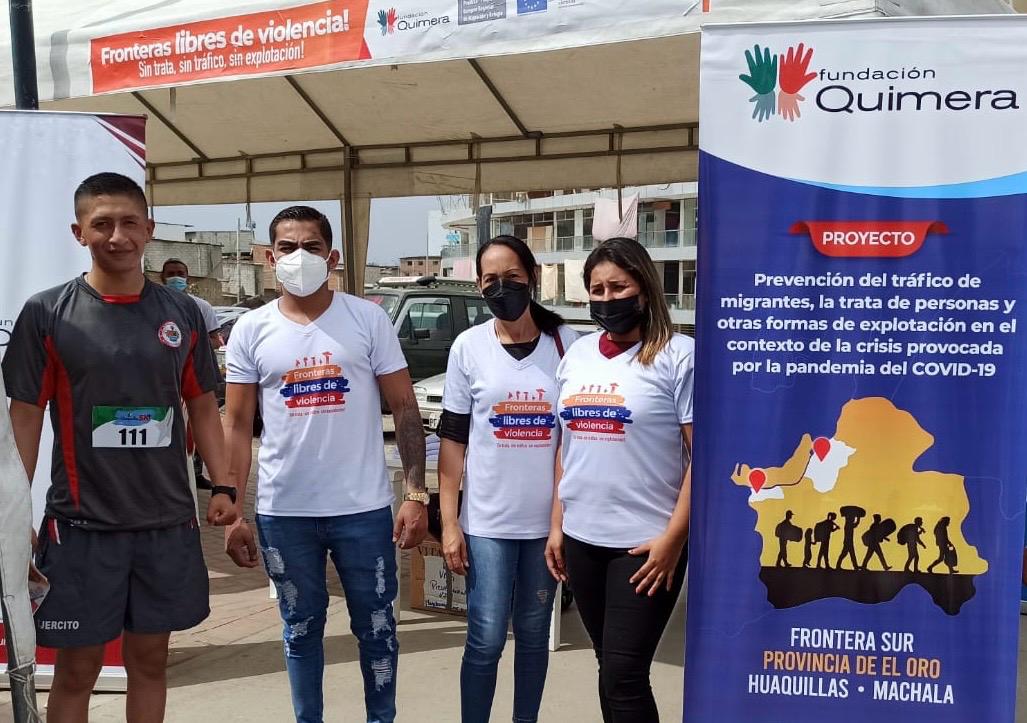
Rosa: Trafficking in Ecuador has increased considerably, also linked to migrant smuggling that was previously not common on the southern border. Since COVID-19, based on government measures regarding militarization and border closure, “trochas” – irregular crossings – were created. Those paths didn’t previously exist for cross-border entries and exits. The only thing that existed until then was the smuggling of merchandise, such as fuel, groceries, etc., but there were no “trochas” to move people irregularly from one territory to another. Now, the situation is even worse because, in the case of Venezuelan citizens, a visa is required to enter Peru - with whom we share the southern border. This generates greater risks of violence for migrants who have no choice but to cross in conditions of greater insecurity and risks on that border.
The restriction measures due to the COVID-19 pandemic also led, in fact, to the criminalisation of sex work, closing places and generating the creation and proliferation of others in secrecy, to which they have had to resort and continue to resort to this day, especially a large number of migrant women, who are specifically persecuted by immigration control operations. In these spaces, overexploitation and abuse, as well as trafficking for sexual and labor exploitation, are very high and difficult to detect.
Furthermore, this situation has also reactivated the tendency to confuse trafficking in women with sex work. It is a challenge, and I believe it has become very relevant in recent years since they want to turn any woman into a victim. We must work more on this issue; now, in this new digital era, we can do many more things and avoid this criminalisation of sex workers or true victims of trafficking.
In that sense, we should develop campaigns with GAATW and share very clarifying ideas because it is a very important issue in which the problem of human trafficking is not being adequately addressed, and, once again, they only want to fix this confusion to exert greater control over women, their bodies and their agency.
Vivian: When you mention that you developed strategies with women, how did you incorporate these perspectives or learnings from working with them?
Rosa: Networking is our biggest and strongest strategy in our experience working with women's organisations. As a recent example, I would like to mention that, in the context of the pandemic and the post-pandemic, the deepening of the structural crisis and the restrictive measures of the State, combined with the accelerated increase in violence and the presence of organised crime gangs, led to a climate of high violation of rights. According to a regional study carried out at the level of 9 countries by the Organization of American States (OAS) and the Refugee and Migrant Working Group (GTRM) during October 2021, the disproportionate impact of these restrictions on migrant women and women from host communities was evident, particularly sex workers - who were criminalised, heads of households, indigenous and Afro-descendant women. In this context, the greatest lack of social protection and understanding of the State regarding the priority needs of these populations became evident.
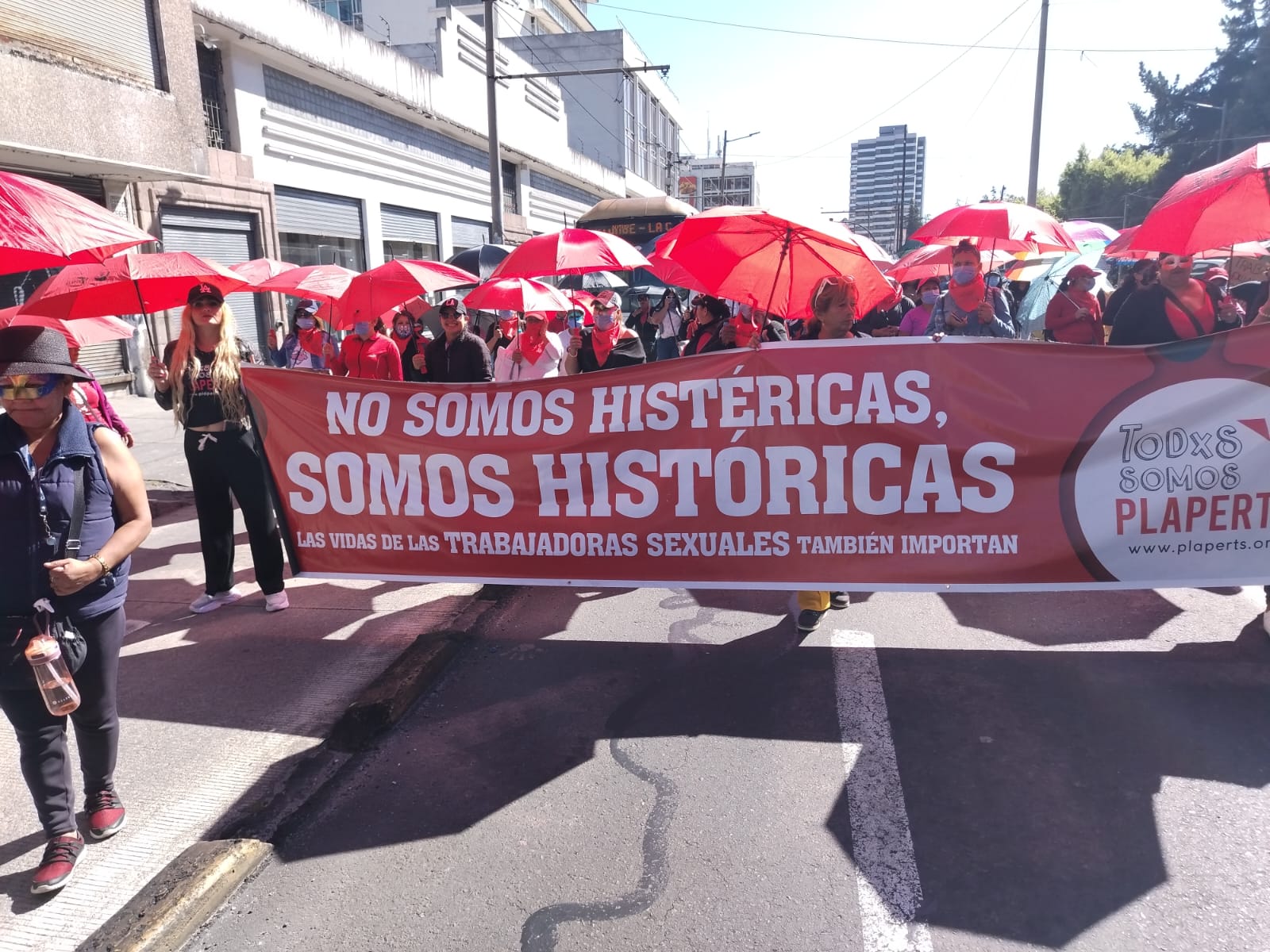
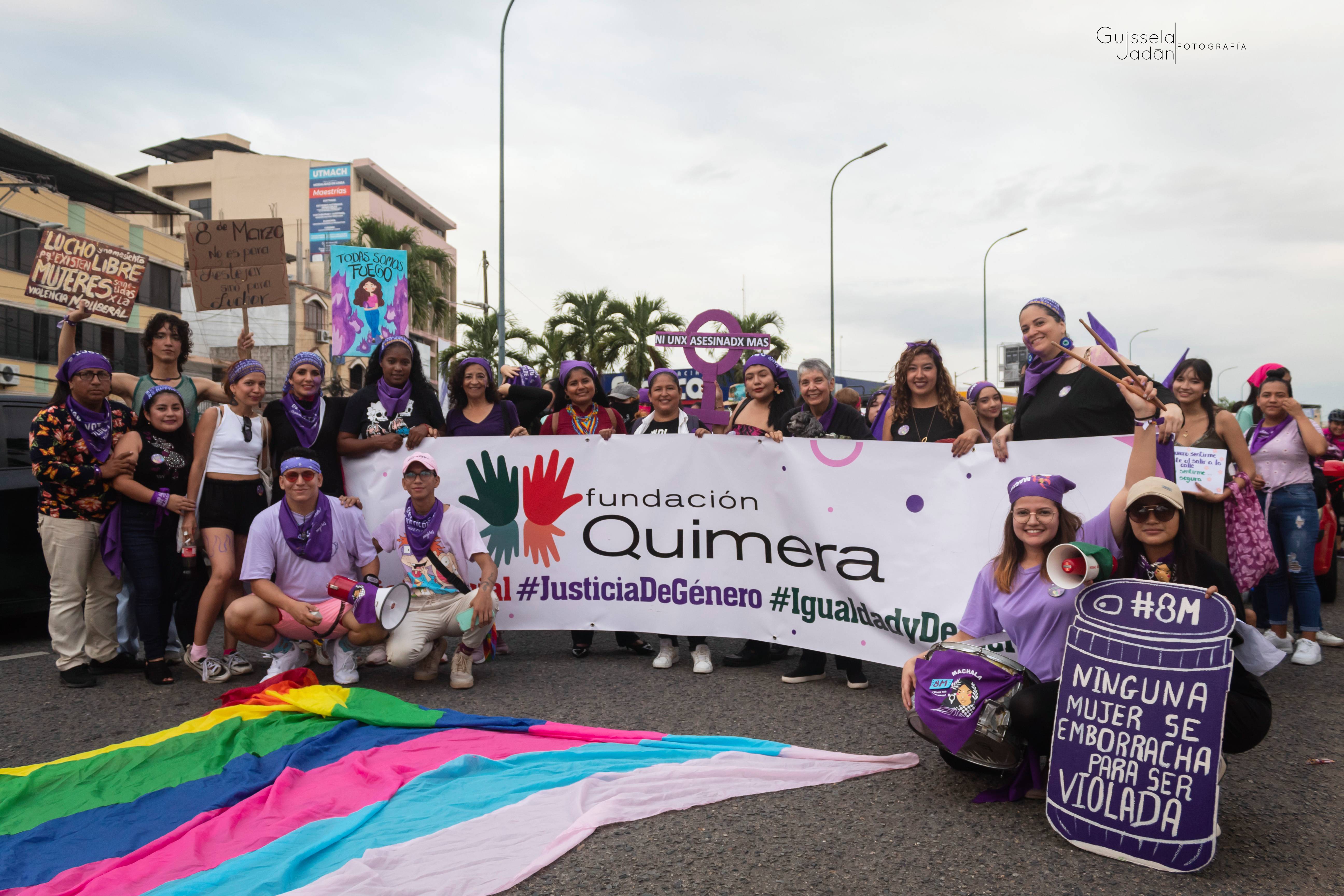 So, it was the articulated work between the sex workers themselves, the organisations of migrant women, the LGBTIQ+ population and people with HIV who took to the streets and public spaces, even in the middle of the pandemic, to denounce discrimination and demand rights. In this way, they strengthened their ties of unity and solidarity to undertake self-help initiatives (e.g. common pots, shelter and self-care spaces, collection and delivery of support). Also, they improved their advocacy actions, through the addition of leadership, voices and proposals to face the crisis. I believe they set an example of good leadership and community self-organising, with networking that continues and expands in defense of their rights.
These are experiences that have not been considered for financing programs, which allow resources to be allocated to them within the framework of respect for their autonomy and leadership.
For Quimera, these experiences of personal and collective empowerment have always constituted the opportunity to feed knowledge about concrete realities from the active participation of community organisations, their knowledge, codes, and languages.
Vivian: You mentioned that in Ecuador there is currently the presence of organised crime gangs that are involved in the perpetration of trafficking cases. Are there challenges directly to the work carried out by Fundación Quimera?
Rosa: Of course, this issue is making it difficult not only for Quimera but the general work of the organisations. Therefore, although there is a lot of trafficking - internal and international - there are not many complaints, and it remains an almost invisible crime. Our joint work with sex workers allowed us to detect cases early. In the current context, all this work has been affected because it involves too many risks for them and, therefore, we no longer have such sustained case identification work. In these last two years, we have worked with the reference of cases coming directly from the state, which also takes responsibility for protection according to its role (Ministry of the Interior, Ministry of Women, Ministry of Foreign Affairs). Quimera also makes the necessary referrals to other organizations and institutions, so that victims have access to comprehensive and multisectoral care in response to their needs and rights.
However, the obstacles are not reduced to the sole presence of organised crime gangs, which has generated an environment of great insecurity, fear and uncertainty in the country. There are also challenges that have to do with the State's policies and responses that focus, once again, on restrictive measures and the militarization of Ecuador's main cities. The needs for economic reactivation, employment and access to livelihoods for the vast majority of the population have remained in the background. Rather, there is greater labor impoverishment, unemployment, and informality, as well as a struggle for survival.
All of this has increased the gap in access to essential services such as health, education, justice, and social protection, among others. Likewise, it makes invisible the increase in gender-based violence and significantly reduces budgets for the social and protection areas. Thus, gender institutions are trying to disappear in the country. Hence, women, young people, migrants, the LGBTIQ+ population, and people from poor and marginalised neighborhoods are persecuted and criminalised.
 Vivian: I take advantage of the fact that you mentioned GAATW, I would like to know what you consider to be the strengths of belonging to an alliance like this? How does Quimera feel about being part of GAATW?
Rosa: We feel very proud and happy to belong to the Global Alliance Against Traffic in Women. We have always admired their work from a distance, because in Ecuador before they did not have members and you did not operate here. Now, with our first face-to-face meeting in Chile, our colleague was able to verify the atmosphere that exists among all the organisations that make up GAATW-REDLAC, in particular, and that many of them have a high level of work on anti-trafficking and human rights.
On the other hand, what makes us align with GAATW is the clarity of its critical thinking, where we agree that there is a strong, defined political position regarding the new international agendas regarding how this issue is being addressed. At Quimera, we consider that there are collective efforts initiated by some international organisations that may add value to the work of community-based organisations, but that are at a different level of power than that of community-based organisations like those of us who form the GAATW. This inequitable level of power and resources is weakening the work and response of local organisations to the issue of gender-based violence, human trafficking and other forms of exploitation. We have to focus our strategies that target the root causes of the problems and empower women, not on welfare-based, reactive and costly responses, that don’t prioritise the sustainability of life and the rights of marginalised people. There has to be a change and we think that GAATW is very critical of that and that is where we want to be.
Vivian: Thank you very much for your words Rosa, and for sharing much more about the history of Fundación Quimera.
"El trabajo en redes es nuestra estrategia más grande y más fuerte en nuestra experiencia trabajando con trabajadoras sexuales y organizaciones de mujeres"
Vivian: Muchas gracias por darnos la oportunidad de conocer más sobre Fundación Quimera. ¿Podrías contarme cómo nació esta organización? ¿Cuáles fueron los principales motivos que motivaron la fundación de Quimera?
Rosa: En Quimera consideramos que no hubo un motivo concreto o un conjunto de motivos para tomar la decisión de fundar Quimera. En 1996 ya había un contexto de movilización en el país y había antecedentes de organización de mujeres, en este caso de trabajadoras sexuales que se organizaron en 1982, en Machala, provincia de El Oro, frontera sur del Ecuador. Es importante resaltar que las trabajadoras sexuales conforman la primera y más grande organización de mujeres que habla de derechos (cuando en el país e incluso a nivel global se habló poco), y cuyo proceso no sólo ha perdurado sino que se ha expandido desde lo local a lo nacional y regional. niveles. Antes de ellos, en los barrios se habían formado organizaciones locales de mujeres, cuyas luchas se centraban en mejoras en los servicios básicos como el acceso al agua, alcantarillado, etc. Sin embargo, esta organización de las trabajadoras sexuales fue diferente porque su lucha se centró directamente contra la explotación y la discriminación que les afectaba. Estaban en contra del estigma de ser etiquetadas como “prostituta” o “mala mujer”, ya que les quitaba humanidad y legitimaba el abuso de las trabajadoras sexuales por parte de individuos (propietarios de sitios de trabajo sexual), autoridades e instituciones, familias y la sociedad en su conjunto.
Tuve la suerte de acompañar ese proceso desde el primer día, constituyendo para mí el aprendizaje más importante y enriquecedor para definir una posición feminista que supere prejuicios, conservadurismos y limitaciones. Por eso, cuando se constituyó Quimera en 1996, continuamos apoyando el proceso organizativo de las trabajadoras sexuales con las que mantenemos vínculos hasta el día de hoy. De igual manera, dos años después, en 1998, se formó el Movimiento de Mujeres de El Oro, y las líderes de trabajadoras sexuales participaron en igualdad de condiciones con otras mujeres líderes de diversos sectores.
Vale señalar que, en todos esos años del siglo XX, nuestra principal vinculación como Fundación Quimera fue con el grupo de feministas por la autonomía, liderado por Tatiana Cordero y Ana Lucía Herrera, entre otras.
Vivian: ¿Podrías contarme más sobre el enfoque de derechos en el que centraban su trabajo? ¿Qué tipo de trabajo hacían con las trabajadoras sexuales, por ejemplo, considerando el contexto de esa época en Ecuador?
Rosa: Desde un principio, Quimera se centró en trabajar los derechos sexuales y reproductivos de las mujeres, incluyendo los temas de violencia de género y trata de personas, así como la prevención del VIH/SIDA. Esto nos generó el mayor aprendizaje al continuar en contacto con trabajadoras sexuales, pero también con población LGBTIQ, personas con VIH, migrantes, etc. Nos vinculamos a estos temas cuestionando enfoques puramente sanitarios y biomédicos, que incluyen el control de cuerpos y sexualidades, abogando siempre por procesos de empoderamiento donde las poblaciones afectadas por la discriminación y la exclusión social tomen la palabra, autorrepresenten sus intereses y se conviertan en sujetos de derechos. Por ello, también hemos trabajado con énfasis en el fortalecimiento de las organizaciones sociales y sus liderazgos, así como de las capacidades locales e institucionales, impulsando procesos de incidencia en políticas públicas que pongan en el centro, y en contra, las necesidades de las personas en situación de mayor vulnerabilidad, marginación y criminalización.
Esta facilitación de procesos como el de las trabajadoras sexuales, por ejemplo, ha contribuido a desarrollar su liderazgo al punto que hoy son líderes poderosas, de cuya agencia seguimos aprendiendo para actuar juntos en la implementación de estrategias de exigibilidad, acceso, y ejercicio de derechos.
En cuanto a nuestro trabajo con la trata de personas y la violencia de género, fue en el año 1997 que iniciamos esta tarea junto a Tatiana Cordero y el Taller de Comunicación de Mujeres, realizamos investigaciones para visibilizar esta realidad en el Ecuador. Allí encontramos que había muchos casos de explotación sexual que también estaban vinculados a la trata, identificando las rutas que involucraban a mujeres que eran movilizadas desde otros lugares. Pudimos constatar que la trata estaba vinculada a un continuum de violaciones de derechos humanos, en contextos donde entran en juego determinantes sociales y estructurales que deben ser considerados para no ver la trata sólo como un delito o fenómeno aislado. También identificamos que la mayor existencia de trata se dio a nivel interno, que los grupos criminales no siempre correspondían a la idea de bandas del crimen organizado, sino también a grupos semi-estructurados, informales e incluso familiares. Pudimos identificar que los contextos en los que mayoritariamente ocurrieron estos casos fueron los de empobrecimiento y violencia. También fue revelador constatar que las instituciones del Estado y sus servidores públicos tenían una visión absolutamente culpabilizadora de las víctimas de trata, incluidas niñas y adolescentes en situación de explotación sexual, a quienes trataban como delincuentes y las recluyeron en casas destinadas a menores infractoras. En ese momento, no existían figuras legales en el Código Penal ecuatoriano para castigar estos delitos (por ejemplo, explotación sexual, trata de personas).
Desde el año 2000, con el apoyo de la OIT y otras agencias de cooperación internacional, hemos trabajado en programas pioneros para el país, donde una vez más señalamos la importancia de promover la prevención y un abordaje integral, basado en el respeto a los derechos de las víctimas y personas en riesgo, respuestas excesivamente punitivas y victimizantes, o criterios de culpabilización de las víctimas.
En el trabajo sostenido en red se fortalecieron las capacidades locales, los enfoques de género y derechos humanos y las políticas públicas. Por ejemplo, en 2005 contribuimos a reformas legales que permitieron el acceso a la justicia de las víctimas y creamos instituciones especializadas como albergues, ampliación del programa de protección de víctimas y testigos, judicialización y condena de los primeros casos de trata y pornografía infantil en el país- en 2006. Por otro lado, gracias a todo lo mencionado anteriormente, se adoptó un modelo que puso en el centro las necesidades de las víctimas y su derecho a la atención, protección y reparación integral, descartando la priorización de los procesos de judicialización como único medio de intervención. Este fue un proceso sostenido hasta el año 2013, donde mantuvimos discrepancias con la agenda global anti trata por su falta de incorporación del enfoque de derechos humanos y el predominio del Estado en respuestas punitivas, control migratorio y restricciones a la libertad de movilidad de personas.
Vivian: En el contexto actual, ¿cuáles son los mayores desafíos en materia de trata de mujeres, incluidas las mujeres migrantes que han tenido una fuerte presencia en los últimos años en el Ecuador?
Rosa: La trata en Ecuador ha aumentado considerablemente, ligada también al tráfico de migrantes que antes no era común en la frontera sur. Desde el COVID-19, a partir de medidas gubernamentales en materia de militarización y cierre de fronteras, se crearon “trochas” –cruces irregulares–. Esos caminos no existían anteriormente para las entradas y salidas transfronterizas. Lo único que existía hasta entonces era el contrabando de mercancías, como combustible, víveres, etc., pero no existían las “trochas” para trasladar personas de manera irregular de un territorio a otro. Ahora, la situación es aún peor porque, en el caso de los ciudadanos venezolanos, se requiere visa para ingresar a Perú -con quien compartimos la frontera sur-. Esto genera mayores riesgos de violencia para los migrantes que no tienen más remedio que cruzar en condiciones de mayor inseguridad y riesgos en esa frontera.
Las medidas de restricción por la pandemia de COVID-19 también llevaron, de hecho, a criminalizar el trabajo sexual, cerrando lugares y generando la creación y proliferación de otros de manera clandestina, a los que han tenido que recurrir y siguen recurriendo hasta el día de hoy, especialmente un gran número de mujeres migrantes que son específicamente perseguidas por los operativos de control migratorio. En estos espacios, la sobreexplotación y el abuso, así como la trata con fines de explotación sexual y laboral, son muy elevados y difíciles de detectar.
Además, esta situación también ha reactivado la tendencia a confundir la trata de mujeres con el trabajo sexual. Es un desafío, y creo que se ha vuelto muy relevante en los últimos años porque quieren convertir a cualquier mujer en víctima. Debemos trabajar más en este tema; ahora, en esta nueva era digital, podemos hacer muchas más cosas y evitar esta criminalización de las trabajadoras sexuales o verdaderas víctimas de trata.
En ese sentido, deberíamos desarrollar campañas con la GAATW y compartir ideas muy esclarecedoras porque es un tema muy importante en el que no se está abordando adecuadamente el problema de la trata de personas y, una vez más, solo quieren establecer esa confusión para ejercer mayor control sobre las mujeres, sus cuerpos y su agencia.
Vivian: Cuando mencionas que desarrollaron estrategias con mujeres, ¿cómo incorporaron estas perspectivas o aprendizajes al trabajar con ellas?
Rosa: El trabajo en redes es nuestra estrategia más grande y más fuerte en nuestra experiencia trabajando con organizaciones de mujeres. Como ejemplo reciente, quisiera mencionar que, en el contexto de la pandemia y la post pandemia, la profundización de la crisis estructural y las medidas restrictivas del Estado, combinadas con el aumento acelerado de la violencia y la presencia de grupos organizados bandas criminales, propiciaron un clima de alta vulneración de derechos. Según un estudio regional realizado a nivel de 9 países por la Organización de Estados Americanos (OEA) y el Grupo de Trabajo sobre Refugiados y Migrantes (GTRM) durante octubre de 2021, el impacto desproporcionado de estas restricciones en las mujeres migrantes y de las comunidades de acogida fue evidente, particularmente las trabajadoras sexuales -que fueron criminalizadas-, jefas de hogar, mujeres indígenas y afrodescendientes. En este contexto, se hizo evidente la mayor falta de protección social y comprensión del Estado respecto de las necesidades prioritarias de estas poblaciones.
Entonces, fue el trabajo articulado entre las propias trabajadoras sexuales, las organizaciones de mujeres migrantes, la población LGBTIQ+ y personas con VIH que salieron a las calles y espacios públicos, incluso en plena pandemia, para denunciar la discriminación y exigir derechos. De esta manera, fortalecieron sus lazos de unidad y solidaridad para emprender iniciativas de autoayuda (ej. ollas comunes, espacios de albergue y autocuidado, recolección y entrega de apoyos). Además, mejoraron sus acciones de incidencia, a través de la suma de liderazgos, voces y propuestas para enfrentar la crisis. Creo que dan un ejemplo de buen liderazgo y autoorganización comunitaria, con redes que continúan y se expanden en defensa de sus derechos.
Se trata de experiencias que no han sido consideradas para el financiamiento de programas, que permitan asignarles recursos en el marco del respeto a su autonomía y liderazgo.
Para Quimera, estas experiencias de empoderamiento personal y colectivo siempre han constituido la oportunidad de alimentar conocimientos sobre realidades concretas a partir de la participación activa de las organizaciones comunitarias, sus saberes, códigos y lenguajes.
Vivian: Mencionaste que en Ecuador actualmente hay presencia de bandas del crimen organizado que están involucradas en la perpetración de casos de trata. ¿Existen desafíos directos al trabajo realizado por Fundación Quimera?
Rosa: Por supuesto, este tema está dificultando no sólo a Quimera sino el trabajo general de las organizaciones. Por lo tanto, aunque hay mucha trata -interna e internacional- no hay muchas denuncias y sigue siendo un delito casi invisible. Nuestro trabajo conjunto con trabajadoras sexuales nos permitió detectar casos de manera temprana. En el contexto actual, todo este trabajo se ha visto afectado porque implica demasiados riesgos para ellos y, por lo tanto, ya no tenemos un trabajo de identificación de casos tan sostenido. En estos últimos dos años hemos trabajado con la referencia de casos que vienen directamente del Estado, que también asume la responsabilidad de protección según su rol (Ministerio del Interior, Ministerio de la Mujer, Ministerio de Relaciones Exteriores). Quimera también realiza las derivaciones necesarias a otras organizaciones e instituciones, para que las víctimas tengan acceso a una atención integral y multisectorial que responda a sus necesidades y derechos.
Sin embargo, los obstáculos no se reducen a la sola presencia de bandas del crimen organizado, lo que ha generado un ambiente de gran inseguridad, miedo e incertidumbre en el país. También hay desafíos que tienen que ver con las políticas y respuestas del Estado que se centran, una vez más, en las medidas restrictivas y la militarización de las principales ciudades del Ecuador. Las necesidades de reactivación económica, empleo y acceso a medios de vida para la gran mayoría de la población han quedado en un segundo plano. Más bien, hay un mayor empobrecimiento laboral, desempleo e informalidad, así como una lucha por la supervivencia.
Todo esto ha aumentado la brecha en el acceso a servicios esenciales como salud, educación, justicia y protección social , entre otros. Asimismo, invisibiliza el aumento de la violencia de género y reduce significativamente los presupuestos para las áreas social y de protección. Así, las instituciones de género están tratando de desaparecer en el país. De ahí que las mujeres, los jóvenes, los migrantes, la población LGBTIQ+ y las personas de barrios pobres y marginados sean perseguidos y criminalizados.
Vivian: Aprovecho que mencionaste GAATW, me gustaría saber ¿cuáles consideras que son las fortalezas de pertenecer a una alianza como esta? ¿Cómo se siente Quimera al ser parte de GAATW?
Rosa: Nos sentimos muy orgullosas y felices de pertenecer a la Alianza Global Contra la Trata de Mujeres. Siempre hemos admirado su trabajo desde la distancia, porque en Ecuador antes no tenían miembros y ustedes no operaban aquí. Ahora, con nuestro primer encuentro presencial en Chile, nuestra colega pudo constatar el ambiente que se vive entre todas las organizaciones que conforman la GAATW-REDLAC en particular, y que muchas de ellas tienen un alto nivel de trabajo en lucha contra la trata y derechos humanos.
Por otro lado, lo que nos hace alinearnos con la GAATW es la claridad de su pensamiento crítico, donde coincidimos en que hay una posición política fuerte y definida frente a las nuevas agendas internacionales sobre cómo se está abordando este tema. En Quimera consideramos que existen esfuerzos colectivos iniciados por algunas organizaciones internacionales que pueden agregar valor al trabajo de las organizaciones comunitarias, pero que se encuentran en un nivel de poder diferente al de las organizaciones comunitarias como quienes formamos la GAATW. Este nivel desigual de poder y recursos está debilitando el trabajo y la respuesta de las organizaciones locales al problema de la violencia de género, la trata de personas y otras formas de explotación. Tenemos que centrar nuestras estrategias que apunten a las causas profundas de los problemas y empoderen a las mujeres, no en respuestas reactivas y costosas, que no prioricen la sostenibilidad de la vida y los derechos de las personas marginadas. Tiene que haber un cambio y creemos que la GAATW es muy crítica con eso y ahí es donde queremos estar.
Vivian: Muchas gracias por tus palabras Rosa, y por compartir mucho más sobre la historia de Fundación Quimera.