In April, Vivian Cartagena, Programme Officer for Alliance Strengthening at GAATW, interviewed Sophie Otiende and Chris Ash, co-founders of the Collective Threads Initiative (CTI), to explore the initiative’s origins, its guiding values, and cross-movement approach to addressing exploitation and advancing human dignity. Sophie and Chris explained how CTI connects struggles across labour rights, gender justice, migration, and climate change, while centring lived experience leadership and community-driven solutions.
Vivian: Welcome Sophie and Chris. I would like to know how and why the Collective Threads Initiative (CTI) was founded? What was the context in which you two came up with the idea to start CTI?
Sophie: Thank you, Vivian, for this invitation. For us, coming into the trafficking space from other movements, where our experiences were still valued, it was strange to see the narrow focus of this sector on trafficking as an issue, without really thinking about all the other issues connected to it. Chris and I had been having conversations on and off around that work. I started working at the Global Fund, Chris and I partnered, and we did the toolkit on meaningful engagement. Those conversations led us to where we are now.
One thing I did at the beginning was to interview a lot of people about their experiences with the sector and their situations. The message was consistent, everyone agreed the issue could not continue to sit in a silo. It doesn't make sense for addressing the issue, for justice, for survivors, or for how people understand it, because it becomes very complex. It's also a newer space, and while all the connected movements have already tried out strategies that have worked, it seems like the trafficking sector wants to come in and start a fight with all those movements, with new language and new tools, which strategically doesn't make sense.
So when I had that conversation with Chris, it was clear it needed to be an initiative focused on cross-movement collaboration, not just in relation to the trafficking sector, but also in relation to where the world is. In human rights generally, silos haven't helped any movement; if anything, they've weakened almost every movement. Movements focus on a specific thing, speak a specific language, and end up thinking they can't collaborate or build solidarity.
When I look at where we are now in the human rights sector, I think in many cases we have forgotten the why. We are all focused on the details that separate us, and we have been losing ground. Each movement focuses on their specific fight while we keep losing ground in the big fight. It's like someone coming to break down the foundation of your house while everyone is focused on their own bedroom. We all need to focus on the foundation to protect the house. Foundationally, there is something that connects us, and that is what we need to act on.
The second thing for us, apart from cross-movement collaboration, was the idea of resources and the fact that resources tend to be more about funding than about things that could actually work in movement work and event organising. I was over 20 when I realised that funding was even a thing. In my community, if something needed to be done, we just came together and did it. There was no writing a proposal and waiting for someone else to help. It saddens me now to go into communities and see that even problems communities could solve themselves, without any external person or organisation, the default is to rely on funding. We had a conversation about what resources actually are, how we can redistribute them, and how we can co-create them together, which was really important to us.
Chris: Something Sophie said to me once that was sort of an ‘’aha’’ moment was that as long as we only mean money when we say resources, the Global North will always have more power. More power to shift and set funding agendas and to define how the work should be done. Instead of communities just taking care of each other and having more ability to do the work they're doing, we require a formalised non-profit to come in, write reports and all these things, while the communities are still taking care of themselves without that institutionalised support.
Several years ago I was part of a group that never had a non-profit or registered entity, but some of the work we were doing included a bi-weekly queer family dinner for young LGBTQ folks who didn't have family support, had to leave their homes, or were unhoused. Those of us who could cook would bring food and have a potluck. Some of the kids came for connection and some came because they were hungry. We never had funding for that. I think about how much more we could have done with the resources that organisations not doing that work have access to.
Sophie reminded me that things like community connections, deep knowledge of what your community needs, and having people's trust are also resources. How much time do organisations spend trying to gain the trust of communities they are trying to serve? People in those communities already have that trust.
I remember hearing an anti-trafficking group in North Carolina talk about doing street outreach in a high-risk community, and they were very proud that they'd arranged a police escort to keep their outreach person safe. And I'm thinking, how's that working out for you? I'm sure everyone wants to talk to you when you show up with a cop. They said: ‘’oh, he's plainclothes’’. I'm sure he's very undercover, but what would it look like if you had people in that community who were already working out safety for themselves doing this work, instead of somebody who's scared of that community?
So this is one of the things we were really thinking about: how do we create models where we are sharing resources with each other? We're really grateful that some of the communities we share knowledge and funds and ideas with, are willing to share their own ideas, connections, and deep insights with us in return. It becomes a more reciprocal relationship.
On the cross-movement work, and this is my new favourite catchline, I feel like human trafficking is 28 different forms of violence in a trenchcoat. We're not the form of violence. We're the legal trenchcoat that enfolds so many different abuses against migrants, women, girls, laborers, domestic workers, sex workers. And yet, instead of acknowledging that, I've heard people in the anti-trafficking space say they don't really have best practices because they're such a new field. I just think they must have their heads in the sand, given the deep knowledge that exists in these other movements.
This is where the name Collective Threads came from. What if, instead of dropping a framework into communities and saying now we need someone to start an organisation to do things this way, we took threads from feminist movements, workers' rights movements, and migrant movements and helped weave them together into a fabric that makes a better safety net for everyone in their community (and against all of those forms of violence) rather than parading around in the trenchcoat and declaring we're something new and unique. We can still use the legal framework to meet people’s needs when needed, but without making it our North Star.
Sophie: On the same point about resources - donors and people with resources are not willing to invest in multiple movements. People will talk about partnership all day, but when they go back and make their investments, those investments are not going into cross-movement work or solidarity work. A feminist funder is going to fund feminist organisations, and the same goes for migration, each funder wants to fund their own movement independently. So our goal is to move resources into collaborations and all the partnerships that people want to make but can't, because they can't get the resources they need. And also to create spaces where people realise that maybe they don't need a funder at all.
For example, part of our cross-movement work is with an organisation that works with trafficked teenage girls, some of whom were child domestic workers in Kenya. We work with other smaller organisations, and one of the key things they were doing was translating the Beijing Platform into teenager-friendly language, not only for a teenager from a privileged school in Kenya, but for any child who’s actually going into a child domestic work 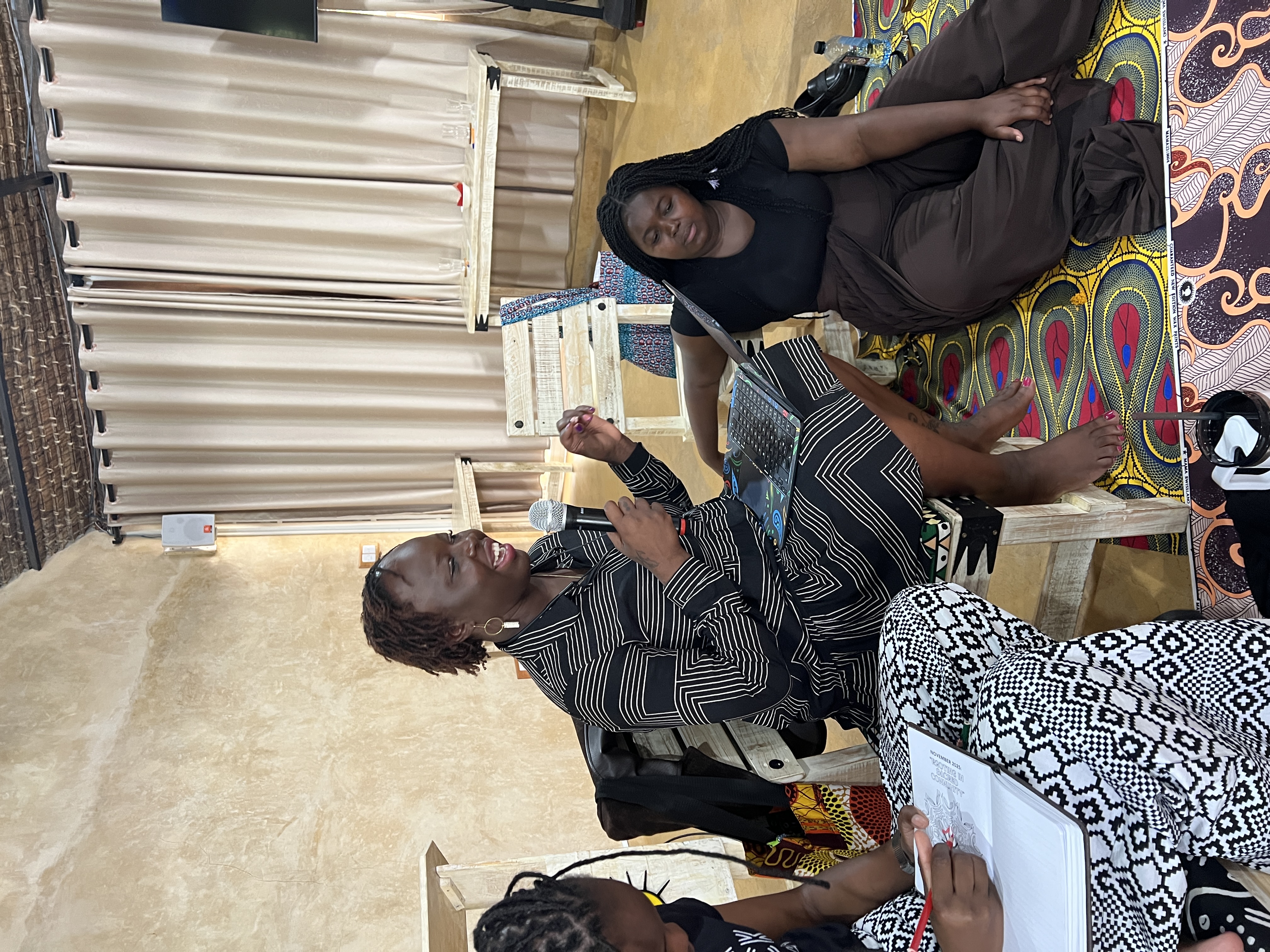 situation, so they can understand it. As we started having those conversations, the issue of communication came up, and how important it would be for documentation and narrative work to bring all of these things together. We have a partnership with Photographers Without Borders, so we brought them in, and when they came, they didn't just come for the project. They came with 10 cameras to give to the teenagers and brought-in additional photographers that we wouldn't have been able to bring in ourselves.
For me, it's also about facilitating spaces where collaboration feels safe. One of the things people don't say out loud is that it's not always safe to collaborate in the development space because someone might take your idea and present it to a donor. Part of the cross-movement work is asking: how can we feel safe with each other? How can we have an honest conversation about 'I don't trust you because we are working on the same issue'?
There's an assumption in the development space that because we're all working on the same issue, collaboration should technically just work, but those of us who have been organising know that is not true. When we organise, we sit together, have tea, talk, go into each other's homes, figure things out and build relationships faster than we build a partnership. For us, it's about creating those spaces where we can finally be honest about collaboration, and about the difficulties and challenges that surround it.
Vivian: That sounds very interesting! Can you tell us more about some of CTI's concrete work and give us a sense of what cross-movement collaboration looks like in practice for you?
Chris: A practical example is the Meaningful Engagement Handbook, now in its second edition, which we put out under a Creative Commons license. We keep hearing that people are adapting it. Someone told us she had translated parts of it into Thai and was using it, and asked if that was okay, which is exactly why it's under a Creative Commons license. We just ask that, if you adapt anything, you send a copy back so we can make it available to others. We're also hearing from folks who are in the process of adapting the framework into a Meaningful Engagement of Survivors in Healthcare Research handbook. As long as it's credited properly and marked as adapted, we love this.
We also created training for survivors of trafficking who want to use that framework in their consulting, coaching, employment, and organising to help formal organisations improve their practices. We had heard so many stories where people felt that survivor leadership just meant telling your story while someone else came in and framed it, e.g. the politician framing it for a legislative purpose, or the NGO director framing it for advocacy and fundraising. So we were trying to help people understand that you can use your lived experience without having to recount your full story every time, and that you can offer concrete guidance.
We then revised this training to focus on lived experience broadly, just as the handbook does. Someone with lived experience of trafficking working in the trafficking space; someone with lived experience of homophobia and transphobia working in LGBTQ spaces; someone with lived experience of gender-based violence working in feminist spaces. What does it mean, more broadly, to work in spaces where your own hard experiences are a regular part of your work?
When we ran this training most recently, we had survivors of human trafficking and gender-based violence, someone who runs an LGBTQ network in Uganda, someone from South Sudan working on peacebuilding and feminist work, and someone from Uruguay working with traumatised children in schools. People came from all these different spaces, all with lived experience of the issues they work on, and it helped us shift the dialogue. Instead of asking 'what does it mean to be a survivor leader', with all the assumptions that it carries in anti-trafficking, we could ask: how do we care for ourselves in these spaces? How do we help formal organisations, not led by people from these communities, understand what a truly inclusive workspace requires? How do we coach them and build relationships without just picking a fight ? How do we come in and say we want to build something together and change some of these practices? That's one example of bringing people together from different movements, and ultimately it transforms how we do anti-trafficking and anti-exploitation work, without sitting in a silo or an echo chamber.
Sophie: We've shared about the meaningful engagement work and the cross-movement work, and I would like to share more about our third workstream that is focused on care. You'll keep hearing Chris and I come back to our personal experiences, because the foundation of what Collective Threads does is rooted in them, in what we've organised in the past. Interestingly, despite the fact that Chris organised in the US and I organised in Kenya, some of the dynamics were quite similar. Sometimes we create differences where it doesn't actually exist.
One of the things that kept coming up as Chris and I were building this work was the idea of care and the fact that for most of our activist lives, we felt uncared for. Fighting the issue was the priority, which still is, but the needs of the people doing the fighting always had to take a back seat. Both of us have gone through burnouts and exhaustion, and especially if we are saying we want movements to be led by people with lived experience, we also have to understand the dynamics of someone who has invested beyond the professional. Most people with lived experience are not there because of a salary. They are there because they genuinely care about the issue, and will sometimes burn themselves to the ground to do the work.
We debated whether to mainstream care across our work or create a dedicated workstream. In the end we decided to be intentional about it, and to focus specifically on working with young activists around prevention of burnout rather than treatment of burnout. Most of the work we see in this space is about treating activists who have already been burnt by the system, not about building a system where the work can be done sustainably. It's almost assumed that as activists we have to burn ourselves down to keep the fire going.
The care work is, essential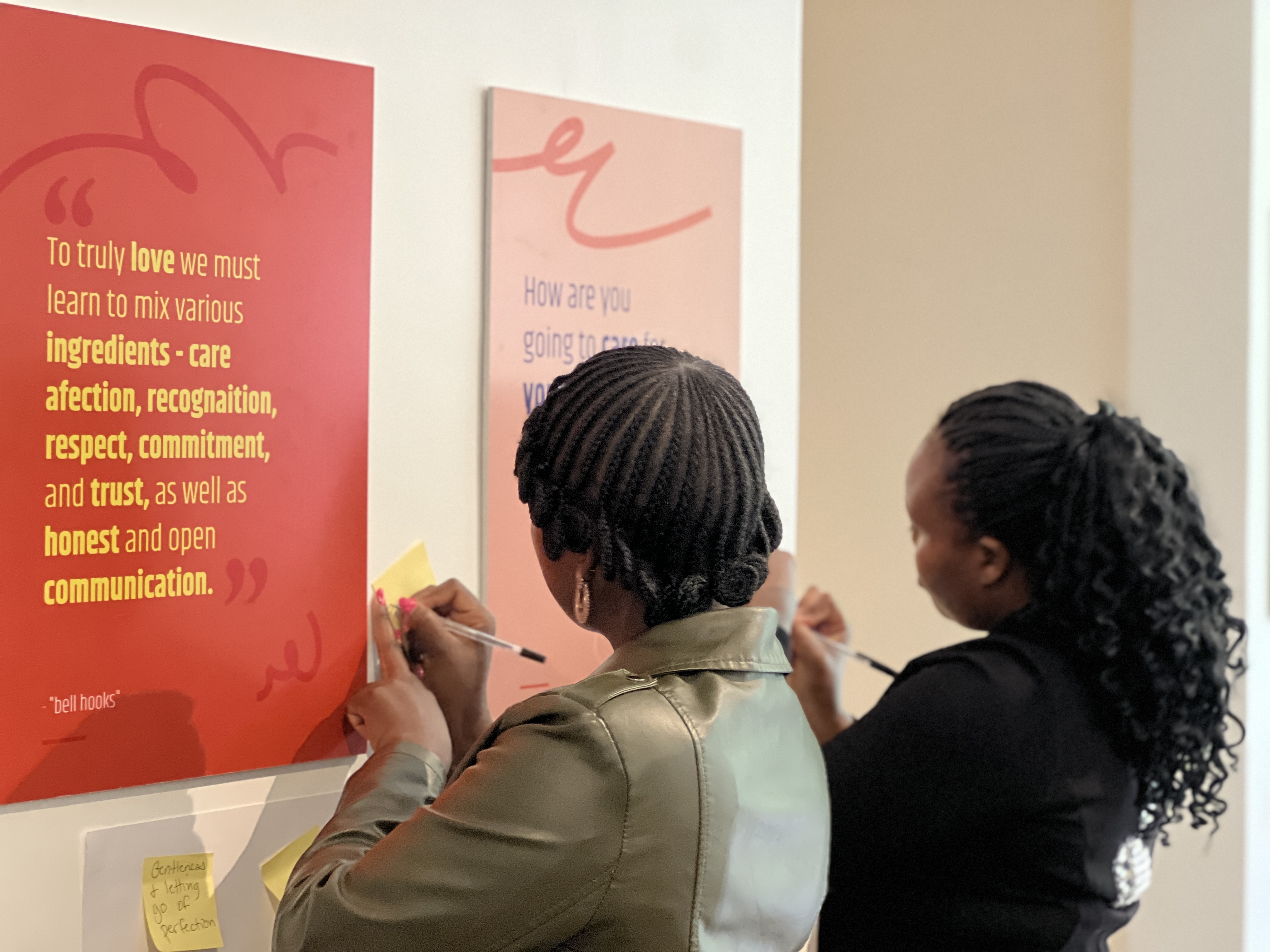 ly, resistance against that. One of the things we're bringing under it is a Care and Healing Justice Fellowship, where we work with young activists to explore what sustainable care looks like in their communities. We held an in-person fellowship and are mentoring fellows through creative circles of care. Chris and I were also asking ourselves: ‘’what would 16-year-old Sophie have needed if someone had shown up for her?’’ She would have needed open doors. That's what we're trying to do: open doors, share our connections, train, correct in love, and show up for the good moments too.
For example, one of the fellows took six years longer to graduate, and after our in-person retreat it became a huge celebration. She didn't have money for a party, so we took some funds from the care work and threw one for her. She was genuinely shocked that this would be considered a priority. It has become a real community, and some of the care fellows are now involved in the cross-movement and meaningful engagement work because there is trust, and there is a community slowly growing.
The feedback has been really meaningful. They requested group therapy, they requested leadership support, and we are providing what they need. When we first started the fellowship, it was meant to be a cross-movement programme, quite grounded in theory. But the fellows told us they didn't need the theory. They have read the books, they understood the concepts. What they needed was someone interested in them as human beings. That broke us, and it completely changed the direction of the fellowship. Since then it has been largely led by them, on what the group needs, what they want to discuss, and celebrating them for what they are doing. I'm really excited about it.
We started last October and may begin recruiting a new cohort soon. In line with our principles, the group is deliberately small, around 11 to 12 fellows, because they told us they wanted a personal relationship with everyone in the space, and that takes time. To stay sustainable we reduced the number from 18 to accommodate what they said they needed. This cohort graduates in October, and the plan is for them to nominate the next group and interview the incoming cohort themselves, in line with our participatory approach.
At the same time, Chris and I are also reflecting on formalising a welfare fund. We get a lot of requests from activists in distress, and we want to be more intentional about what that support could look like.
Chris: I'm sure you're gathering a few things. One is the co-creative process. This makes our funders a little frustrated sometimes, because they want to know what a programme is going to look like, and we don't know yet, because we're going to spend the first few months talking to participants on the ground to design it with them before we really get rolling.
The other thing you might be noticing is people moving into steering the very programmes they helped us create. Sophie mentioned that the care fellows will be the ones interviewing the next cohort.
The other thing Sophie reminded me of is how we think about impact. We're partnering with people who are leading local initiatives and local change, and doing some of that support work to help connect people to resources. We know that our impact is going to be in the ways we help leaders who are affected by these issues feel supported, cared for, and equipped, rather than just thrown out there. Thinking about what Sophie and I have gone through in some of our spaces as leaders, we're trying to make sure they don't have to go through those same rites of passage.
Vivian: I just want to make sure I understand the scope of your work. When you talk about going into communities, it sounds like a very international work. Where and who are you specifically reaching out to? For example, in the training you described now, where does it take place, and which communities are invited or selected to participate? I'd just like to get a clearer geographical picture.
Sophie: That was actually something Chris and I discussed carefully, and we went back to asking ourselves, as activists: ‘’what would we do?’’ The answer was: start with the places and people we know. Chris reaches out to their networks, I reach out to mine.
For the fellowship, for example, because it had to be in person and I was going to be there, it was mainly East Africa focused. People were nominated by our contacts, someone who felt a particular person would benefit. So it's very relational rather than casting a wide net. Most of our partnerships work that way.
Chris: And it's not just that we're working with people we know, they're connecting us to people doing interesting work, as Sophie said. And because some of what we do, especially around meaningful engagement, is less a strategy or a how-to and more a framework that can be adapted, the implementation is going to look different in different places. People can take the concepts and do what fits in their communities.
For me, it's important in the coming year to develop a Spanish/Latin American focused meaningful engagement framework, which is part of why we had attendees from those communities who are already familiar with our work.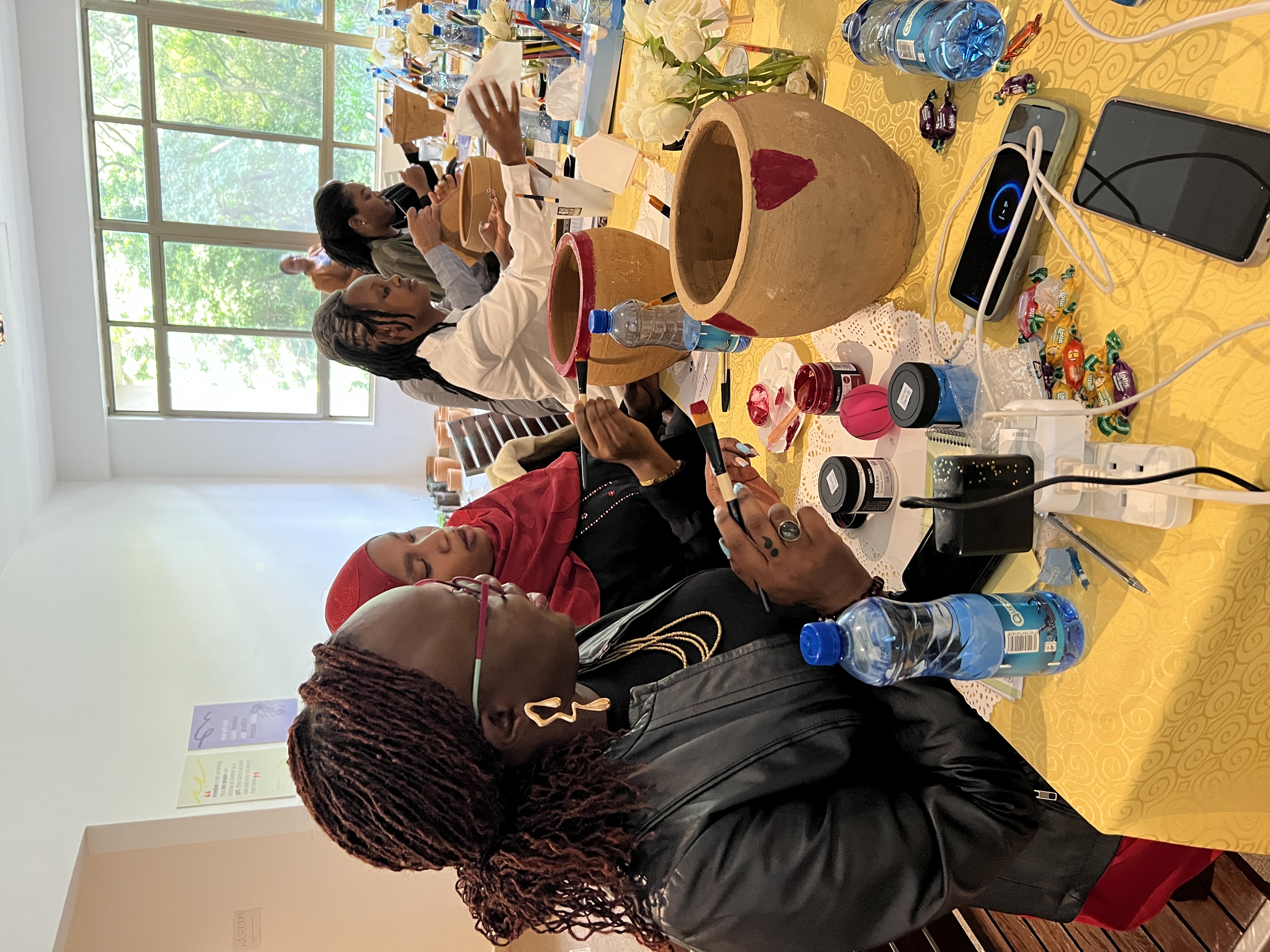
I also brought someone I met at the United Nations Voices of Resilience conference. I thought she was great because she got on a panel and called out colonialism, and I thought that it would be strategic to get to know more about the arguments to effectively challenge the colonial approaches to addressing trafficking.
Sophie: There's also this whole idea of development determining how we organise, even the way we look for participants is often shaped by the numbers donors want. But if you were doing something in your community, you'd just reach out to people you know and trust. So we keep going back to our organising roots and asking: ‘’if we weren't doing this for a donor, what would we do?’’
It's also helped with accountability. When people refer others to us, they're accountable for what happens in that relationship. We've had situations where we've had to say 'no, we won't work with you', and honestly, it's been easier to do that here because there's a container and a relationship that holds that accountability.
Vivian: Taking into account all what you’ve mentioned about working with communities, I'd like to know more about the current context. What are the biggest challenges you're picking up from the communities you work with, on issues around migration, gender-based violence, trafficking, exploitation? And alongside that, what are the biggest challenges CTI itself is facing?
Sophie: The challenges are very context-specific. For the cross-movement and care work, which is mainly East Africa based, the shrinking of civic space is huge. We're working with young activists for whom protests against political regimes are a major concern. Discussions around tax and public finance have also become central, and we're not talking about personal finance. The protests in Kenya last year, for example, were about how the government is using taxes and the finance bill, how it's budgeting, and who has a say in that. Right now a big focus for the group is participation in upcoming elections, since most of them will be voting for the first time.
On migration in East Africa, in Kenya specifically, there’s now a government actively brokering bilateral deals to send migrant workers to Germany, Saudi Arabia, and elsewhere. It's becoming harder and harder to speak up about migration and trafficking in the way we used to, especially when the government itself is the main actor sending workers into situations where they are violated.
The broader global human rights situation and the ongoing wars are also significant. On the funding side, the young activists we work with have been strongly critical of the NGO and development industry and its overdependence on external funding, which has made for interesting conversations. And the rising cost of living is creating new vulnerabilities that feed directly into exploitation.
For CTI, the biggest challenge has been getting people to understand us. People question what we're doing and how we're doing it. And because Chris and I have primarily worked in human trafficking, there's a tendency to box us into that space and keep pulling us back to it. Being able to communicate the work clearly, and helping people understand why we're doing it this way and at this moment, has been a real challenge.
Chris: On migration, in the U.S., we're seeing trafficking survivors being detained even when they have active visa protections. We see survivors who are still experiencing violence.
And on Collective Threads, Sophie said it well. I think a lot of it comes down to a lack of understanding of intersectionality. When people say 'pick which movement you're working in,' they don't like the 'I contain multitudes' response, even though we're not just saying that theoretically. We're practically doing things that impact multiple movements, and those movements are better able to learn from each other. With our meaningful engagement and cross-movement work, instead of trafficking survivors doing survivor leadership and only learning from other trafficking survivors, we have people doing impacted leadership across multiple movements, for example, sharing ideas and strengthening each other's work in the process.
Because people struggle to conceptualise what cross-movement work looks like in practice, they're hesitant. And without understanding that we have a practical implementation that is actually working on the ground, it's hard to get them on board.
Vivian: Yes, I think at GAATW we are constantly bringing our members together to brainstorm about what movements actually mean and how we create inter-movement dialogues. But it's taking time, because as you said, anti-trafficking is situated and categorised in a silo, while it's actually intersecting with so many different issues under the broad umbrella of human rights. But anyway, one of my last questions is regarding your membership in GAATW. How do you expect this experience to strengthen the work you are already doing? And what venues do you see for collaborating and working together, whether now or in the future?
Sophie: I feel like GAATW has been ahead, at least according to me, in consistently saying what we are saying about human trafficking not being a single issue, and has been reinforcing that from the get-go. I feel like you have been one of the singular voices consistently saying 'this issue cannot be discussed in the ways you are discussing it.' And not just that, but also building knowledge around it. When we think about partners and membership, one of those things is the deep knowledge you already have about how this issue is interconnected, the different partners that are working on it, and their needs. That for us is really beneficial. I personally read almost every Anti-Trafficking Review you put out.
So knowledge-wise and values-wise, being able to 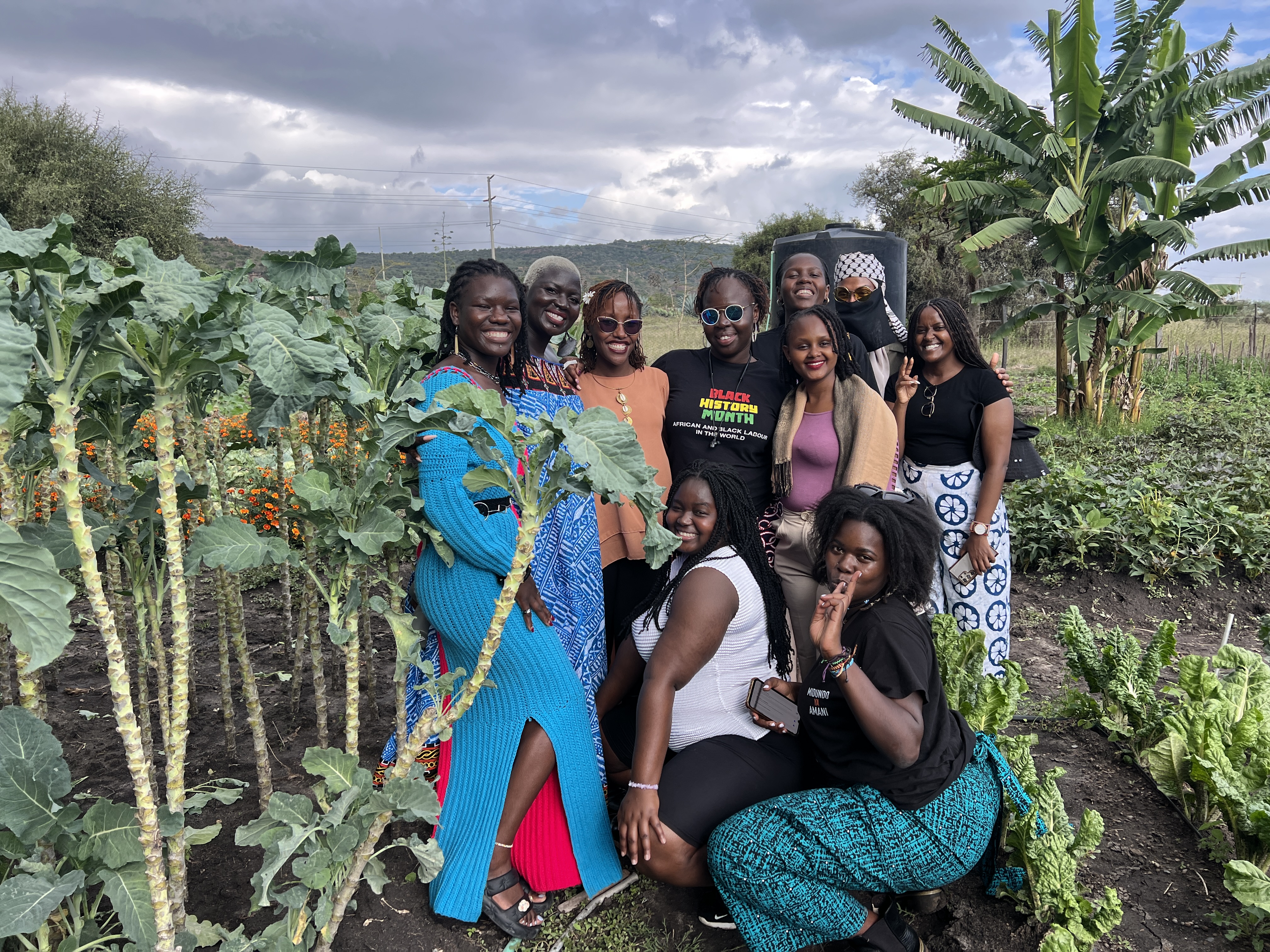 understand your experience in relation to this issue and what has gone on would be really valuable. And I think also just the access to the membership and partners. As I said, we think relationships are really important, and GAATW membership creates spaces where partnerships can be built because you have already set values that people have to align with, and that makes it easier to meet new partners and people we could collaborate with to further our mandate and what we are trying to do.
Chris: That's the part I'm most excited about. We mentioned doing this through relationship and referral, gradually building out so we don't drift too far from our values too quickly. We want to stay values-driven, and that's easier to do through relationships. The opportunity to connect with and learn more about what other members are doing in parts of the world where we're not yet working is something that, as we continue to build out our networks, is going to be wonderful for us. And I hope that, coming back to what we said about reciprocal resources, that's somewhere we can find ways to strengthen each other's work.
Vivian: Thank you both so much. I don't have any more questions, but is there anything else you'd like to add, whether any plans or directions you already have in mind for CTI?
Sophie: Some of the cross-movement work we are doing, especially the care work and the fellowship, is something we want to expand to other regions. Now that we've tested it, it would be great to try it in Southeast Asia and Latin America, so those are the next areas we're looking at. Also, in setting up the welfare fund, it would be great to better understand what different partners are currently going through and what we could look at in terms of organising together.
But, generally, I'm excited because our work is really focused on co-creation, so we're also just excited to listen deeply to what is needed and to be able to shift based on that.
Vivian: That’s lovely! We would be very happy if we can support you on this. Thank you both for this conversation.